

Close
Menu

NFT's & Apparel

Sale!

Additional information

Weight .5 lbs
Dimensions 32 × 23 × 1 in
Color

Asphalt, Black, Dark Heather Grey, Military Green, Natural, Navy, White

Fabric

Cotton

Size

XS, S, M, L, XL, 2XL, 3XL

Style

Short Sleeve

Brand

tfishgear

Print Type

DTG (Direct to Garment), DTF (Direct to Film)

Production Note

Shirts are made to order. Please allow up to five days for your order to be fulfilled and shipped.

Garment Details

Unisex Jersey Tee

This body-conscious jersey is tailored for a custom contoured fit. You will want to wrap your body in this tee!

4.2 oz., 100% combed ringspun cotton (Dark Grey Heather is 52/48 cotton/polyester, Athletic Heather is 90/10 and Ash is 99/1 cotton/polyester), 30 singles
Shoulder to shoulder taping
Coverstitched collar and hemmed sleeves

No reviews found

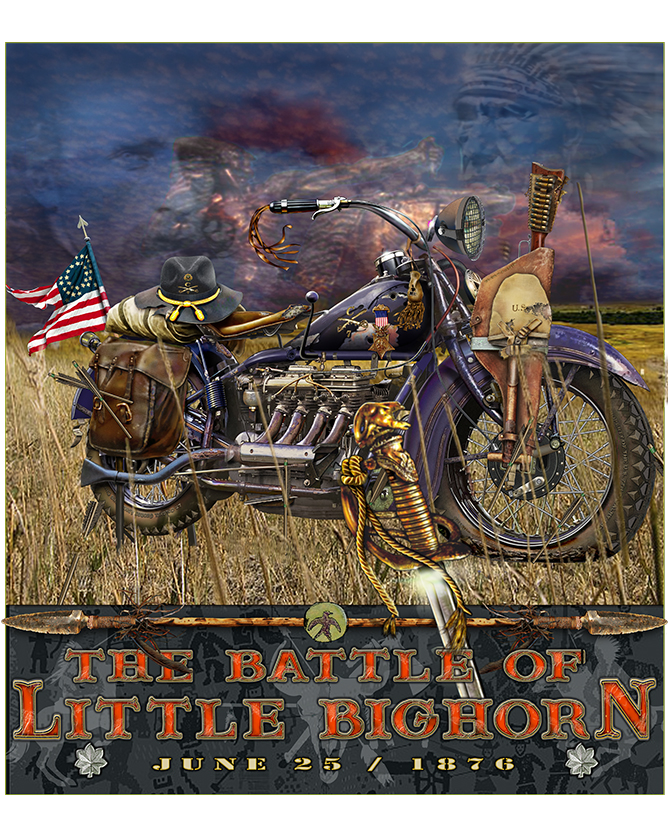
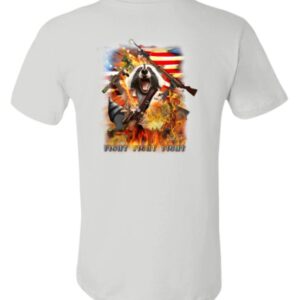
Battle of Little Bighorn Bella Short Sleeve Tee

This short sleeve tee is the perfect canvas to display Jene’s original art. The Battle of Little Bighorn is a concept piece with a historical story to tell.

0

Original price was: $44.98.Current price is: $35.98.

Sold By: tfishgear.io SKU 3001-4 Categories , Tags , , ,

A Motorcycle with a Story to Tell

Exceptional Bella short sleeve tee that is a perfect canvas to display Jene's original art. "The Battle of the Little Bighorn" is a concept piece with a story to tell. Originally dropped as an NFT, Jene' revised it specifically for this T-shirt collection. You can preview the "The Battle of the Little Bighorn" NFT in the Historic Motorcycle Art Collection Roadmap.
A historical perspective, provided by Grok 2,  is presented below. Jene' answers the question... What if Custer rode a motorcycle instead of a horse? The irony is, of course, that the motorcycle is a 1932 Indian Scout.
The purchase of a Battle of the Little Bighorn tee will entitle you to purchase a reduced cost numbered NFT. If you would like to join the community and support Jene's NFT art, please leave a comment or review and so indicate.

Original Historical Art by Jene'

The Battle of the Little Bighorn, also known as Custer's Last Stand, is one of the most famous conflicts in American history, occurring on June 25-26, 1876, near the Little Bighorn River in Montana Territory. Here's a historical perspective on the event:

Background:

  • Native American Perspective: For the Lakota, Cheyenne, and Arapaho tribes, this battle was part of their resistance against U.S. government efforts to force them onto reservations. The area was sacred land, and the tribes were fighting to maintain their way of life, including hunting rights on their traditional lands.
  • U.S. Military Perspective: The U.S. Army, led by Lieutenant Colonel George Armstrong Custer, was part of a broader campaign to move Native American tribes to reservations, spurred by the discovery of gold in the Black Hills, which was part of the Great Sioux Reservation by the Treaty of Fort Laramie (1868). The military operation aimed to curb the influence of leaders like Sitting Bull and Crazy Horse, who were prominent in resisting this encroachment.

The Battle:

  • Custer's Strategy: Custer split his 7th Cavalry into three battalions to surround what he believed was a smaller group of Native Americans. However, he underestimated the size of the gathered forces, which included over 1,500 warriors from various tribes united under leaders like Crazy Horse and Gall.
  • Outcome: The battle resulted in a decisive victory for the Native American forces. Custer and all 268 soldiers with him in his immediate command were killed, an event that shocked the American public and led to national mourning but also to increased military presence in the area.

Aftermath:

  • Immediate Consequences: The U.S. government responded with even more aggressive policies, leading to the eventual defeat of the Sioux at the Battle of Slim Buttes a few months later and the surrender of key leaders like Crazy Horse in 1877 and Sitting Bull in 1881.
  • Long-term Impact:
    • For Native Americans: The battle was one of the last armed resistances to U.S. expansion. It symbolized the courage and strength of Native resistance but ultimately led to further loss of land and autonomy.
    • Cultural Impact: In American culture, Custer has often been mythologized, with his defeat a subject of much folklore, literature, and film. This portrayal has varied over time, sometimes glorifying Custer and at other times focusing on the Native American perspective.
  • Historical Reassessment: Over time, there's been a shift in how the battle is taught and remembered, with more attention given to the Native American viewpoint. Historians now often discuss the battle in the context of land rights, cultural survival, and the broader conflict between indigenous peoples and colonial expansion.
  • Archaeology and Memorialization: The site is now part of Little Bighorn Battlefield National Monument, where efforts are made to commemorate both the U.S. soldiers and the Native American warriors. Archaeological studies have also helped piece together the events more accurately from both sides' perspectives.
This battle remains a poignant reminder of the clash between expanding American interests and the indigenous peoples of the Great Plains, encapsulating themes of cultural clash, military strategy, and the tragic inevitability of the end of a way of life for Native Americans.

Shirts are custom made to order. Please allow up to five days for your order to be fulfilled and shipped by our fulfillment partner.

Size Chart

 Size

XS

S

M

L

XL

2XL

3XL

4XL

Body Length

28

29

30

31

32

33

34

35

Body Length Tolerance

1

1

1

1

1

1

1

1

Body Width

17

18 1/2

20

21 1/2

23

24 1/2

26

27 1/2

Body Width Tolerance

1

1

1

1

1

1

1

1

svg svg